Volume-first hypertrophy programming
Your best sets are
the first eleven.
Weekly volume is what builds muscle, but only about eleven sets per muscle land in any one session. Sets past that cost you time and give back very little. TrainTwice splits your week so all of your volume counts.
The problem
Most programs stack too much work into one day.
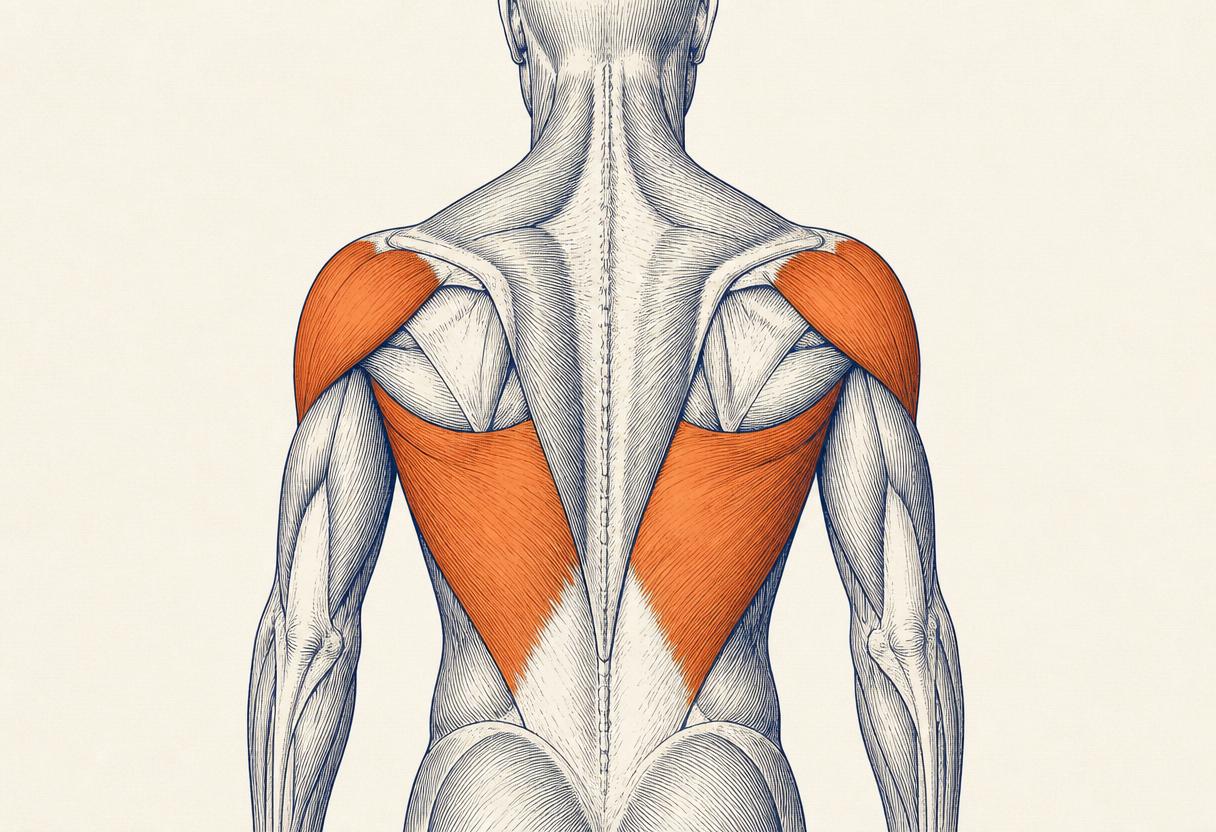
A typical "chest day" puts twelve to twenty sets of pressing into one session. Per-session stimulus saturates well before that: past roughly eleven sets for a muscle, the extra sets add fatigue without measurable growth. The session feels hard, and the surplus does not show up as size.
The contract
Every week commits to a number per muscle.
Before you train, TrainTwice writes the week down: how many sets each muscle is owed. From then on it keeps score against that number — banked, still scheduled, and the exact lines that fail when a session is missed.
Sample week — 4 sessions, full gym, 60 minutes. Two sessions logged as planned, Friday skipped, Saturday still ahead. It is computed by the same code that runs in the app, not a mock-up.
Build your routineOpen the lines to see every muscle the week owes sets to.
- Upper chest lands under the minimum effective dosecriticalAgainst the contract · 4.8 sets owed against 1.4 of 6.2 projected. Against its committed 6.2 sets a week.−6
- Mid chest lands under the minimum effective dosecriticalAgainst the contract · 3.9 sets owed against 2.8 of 6.7 projected. Against its committed 6.7 sets a week.−4.5
How it works
Four steps, every week.
What's inside
Features
The evidence
Why twice
A 2025 meta-analysis in Sports Medicine (Pelland et al.) found that training frequency on its own does not change how much muscle you build; total weekly volume does. A 2025 analysis by Remmert et al. found a ceiling inside each session: past roughly eleven sets for one muscle, additional sets stop producing measurable growth. Put together, a week with enough volume to grow well holds more sets than one session can use. Twice a week is where the rest of that volume has to go.
Pelland et al., Sports Medicine (2025) · Remmert et al., SportRxiv (2025) · Every rule, and how good its evidence is
Calibration
How we find your numbers
Your set counts come from your own logs instead of a fixed template. The first two weeks run light and end some sets at failure, which shows how far your effort estimates sit from the real thing. Most people are three to five reps off. Volume then climbs one set a week per muscle for as long as you keep progressing.
FAQ
Questions
Is twice a week enough for a muscle to grow?
Yes. In the current evidence, weekly volume drives growth and frequency by itself does not. Twice is the lowest frequency that lets a good weekly volume stay under the per-session ceiling. Training a muscle more often is fine; less often means wasted sets.
I can only train 3 days a week. Will this work?
Yes. The builder fits the full split into your available days, and the letter grade is achievable on any schedule that clears each muscle's weekly minimum — a three-day week can grade as high as a six-day one. What more days buy is reach: a higher ceiling on the weekly stimulus those days can deliver, and the points on your card are measured against that ceiling.
Do I need a full gym?
No. You choose the equipment for your program, from a full gym to dumbbells only or bodyweight only, and exercise selection stays inside that choice. Bodyweight movements progress through reps instead of load.
What does the letter grade actually mean?
It grades the plan, not you. The letter blends how well the week uses the time you gave it with how much of the reachable weekly volume it delivers. The points beside it measure your stimulus against the same reach — that is why they carry a percentage. If a muscle sits under its minimum effective dose, the grade is capped until it is fixed, and where a fix exists the card offers it in one tap.
Put your sets
where they count.
Building a graded, twice-weekly program takes about thirty seconds.
Build your routine